Inside the tea industry's appetite for wood
Tea is Kenya's largest industrial user of firewood. It is also showing how a sector can do more with less wood.
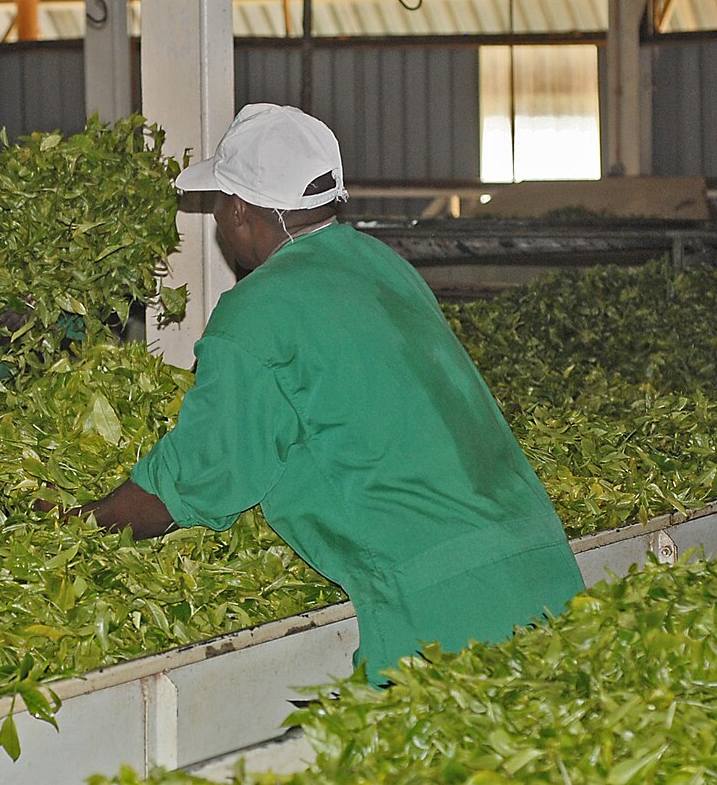
Researchers estimate the Kenyan tea industry needs about one million tonnes of firewood a year, mostly to dry leaf. KEFRI reports that almost all thermal energy in Kenya's 113 tea factories comes from firewood and other biomass. Between 2008 and 2013, KTDA factories alone used an estimated 3.9 million m³ of firewood from exotic plantations.
Less wood per kilo
Efficiency programmes are paying off. Between 2013 and 2017 the average KTDA factory cut energy use from 35.21 to 29.76 MJ per kilo of made tea, a 15% drop.
Source: The Standard, reporting KTDA figures.
Where tea is heading
- Co-firing: factories in Nyamira blend firewood and briquettes at 75:25, a ratio limited by older boilers.
- Own power: some KTDA factories now make their own electricity and have sold idle land bought for firewood plantations.
- Drier wood: seasoning sheds and covered storage are spreading across factories (see Moisture is money).
Tea shows the pattern other manufacturers will follow. Wood stays central, but buyers want it drier, steadier and backed by sustainable sources. Plants are also getting better at using every megajoule.
- Firewood vs briquettes in the Kenyan tea industry, Sustainability (2022)
- Nyamira tea sector turns new leaf, The Star (2025)
- Tea industry boosts forest cover in Kenya, Earth Island Journal
- Farmers to earn more as energy costs go down, The Standard
- KTDA factories step up land, tree sales, Nation
- KEFRI, Energy in Woody Biomass (2020)